Get the fuck out of my face this is the coolest shit i’ve ever seen, do you realize how lucky we are to bask in the scientific capabilities of NASA? Holy fucking hell I love science
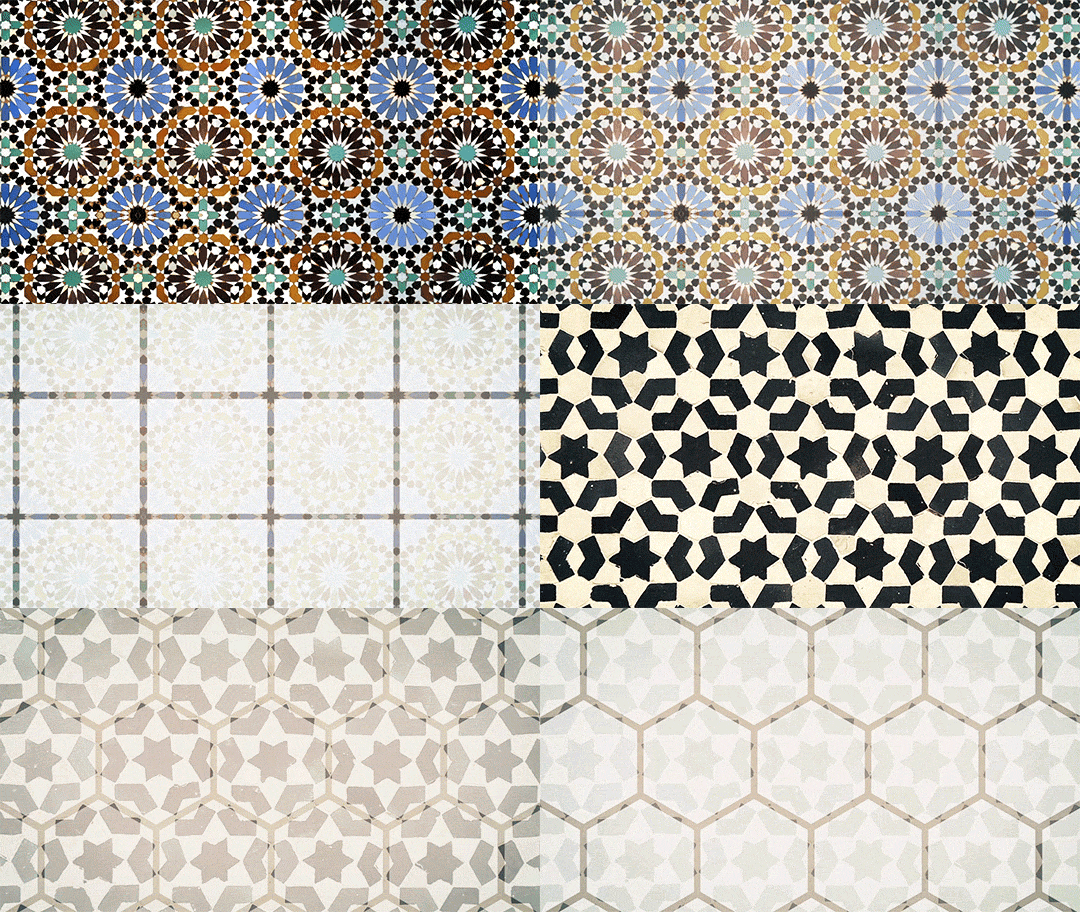
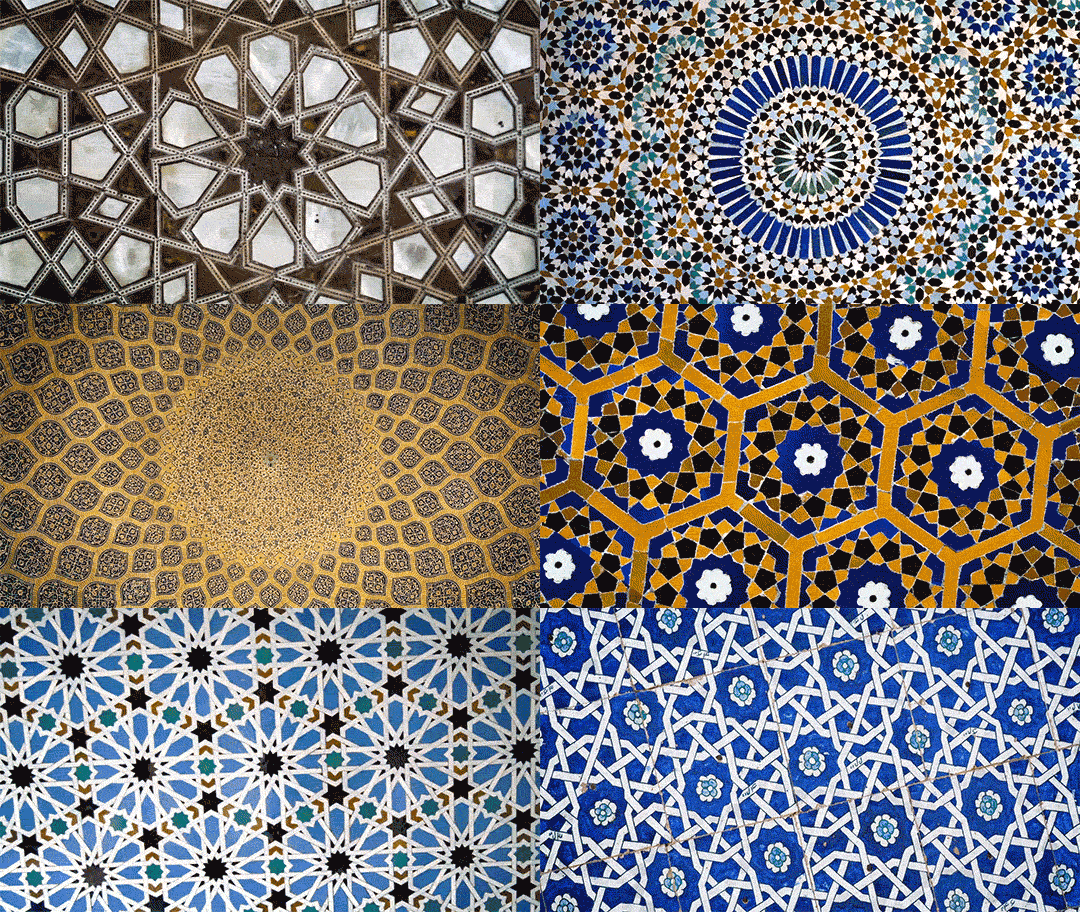
In Islamic culture, geometry is everywhere. You can find it in mosques, madrasas, palaces and private homes. This tradition began in the 8th century CE during the early history of Islam, when craftsman took preexisting motifs from Roman and Persian cultures and developed them into new forms of visual expression.
This period of history was a golden age of Islamic culture, during which many achievements of previous civilizations were preserved and further developed, resulting in fundamental advancements in scientific study and mathematics. Accompanying this was an increasingly sophisticated use of abstraction and complex geometry in Islamic art, from intricate floral motifs adorning carpets and textiles, to patterns of tile work that seemed to repeat infinitely, inspiring wonder and contemplation of eternal order.
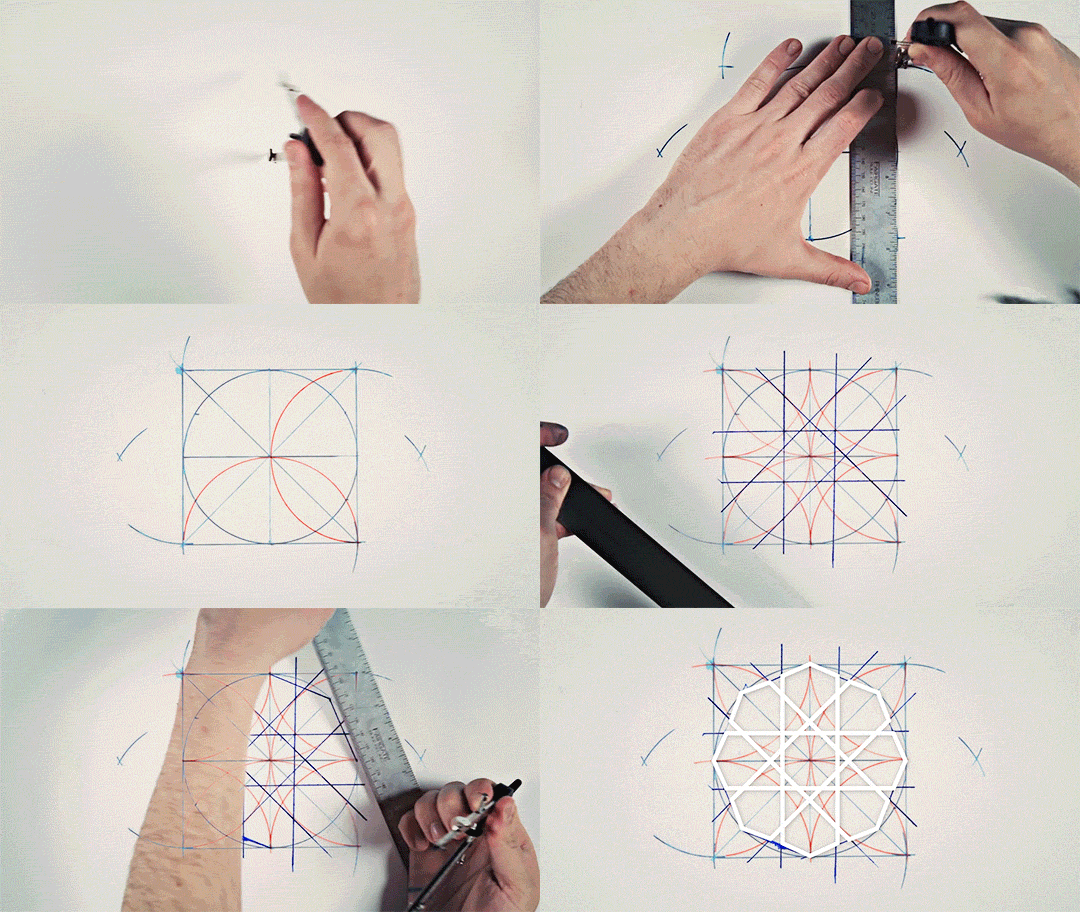
Despite the remarkable complexity of these designs, they can be created with just a compass to draw circles and a ruler to make lines within them, and from these simple tools emerges a kaleidoscope multiplicity of patterns. So how does that work? Well, everything starts with a circle. The first major decision is how will you divide it up? Most patterns split the circle into four, five or six equal sections. And each division gives rise to distinctive patterns.
There’s an easy way to determine whether any pattern is based on fourfold, fivefold, or sixfold symmetry. Most contain stars surrounded by petal shapes. Counting the number of rays on a starburst, or the number of petals around it, tells us what category the pattern falls into. A star with six rays, or surrounded by six petals, belongs in the sixfold category. One with eight petals is part of the fourfold category, and so on.
There’s another secret ingredient in these designs: an underlying grid. Invisible, but essential to every pattern, the grid helps determine the scale of the composition before work begins, keeps the pattern accurate, and facilitates the invention of incredible new patterns. Let’s look at an example of how these elements come together.
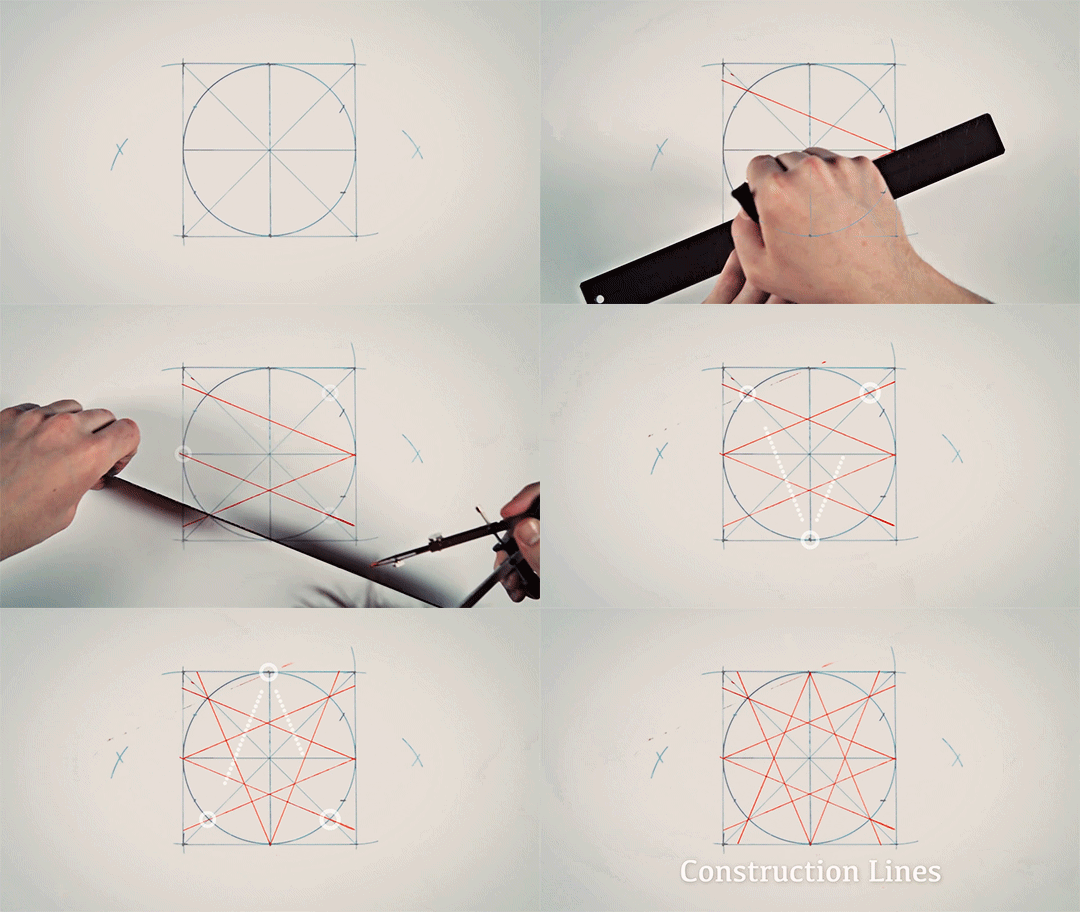
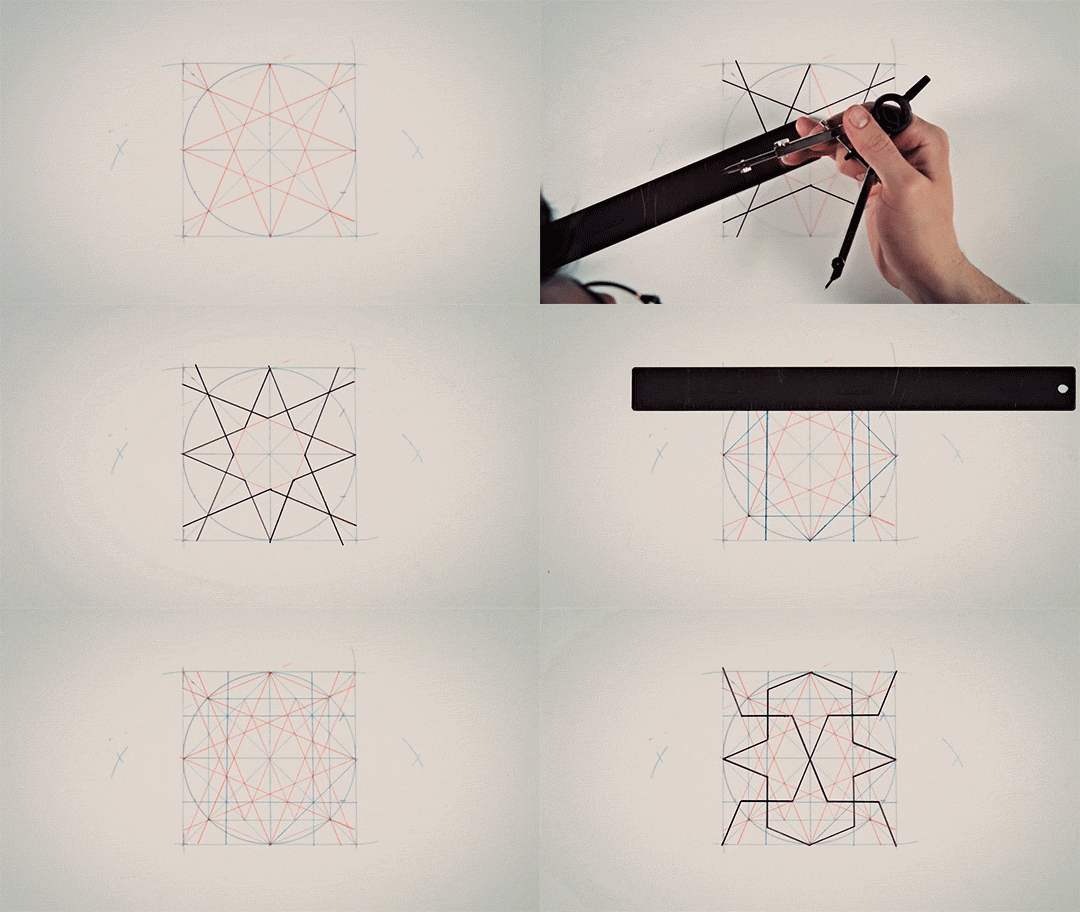
We’ll start with a circle within a square, and divide it into eight equal parts. We can then draw a pair of criss-crossing lines and overlay them with another two. These lines are called construction lines, and by choosing a set of their segments, we’ll form the basis of our repeating pattern.
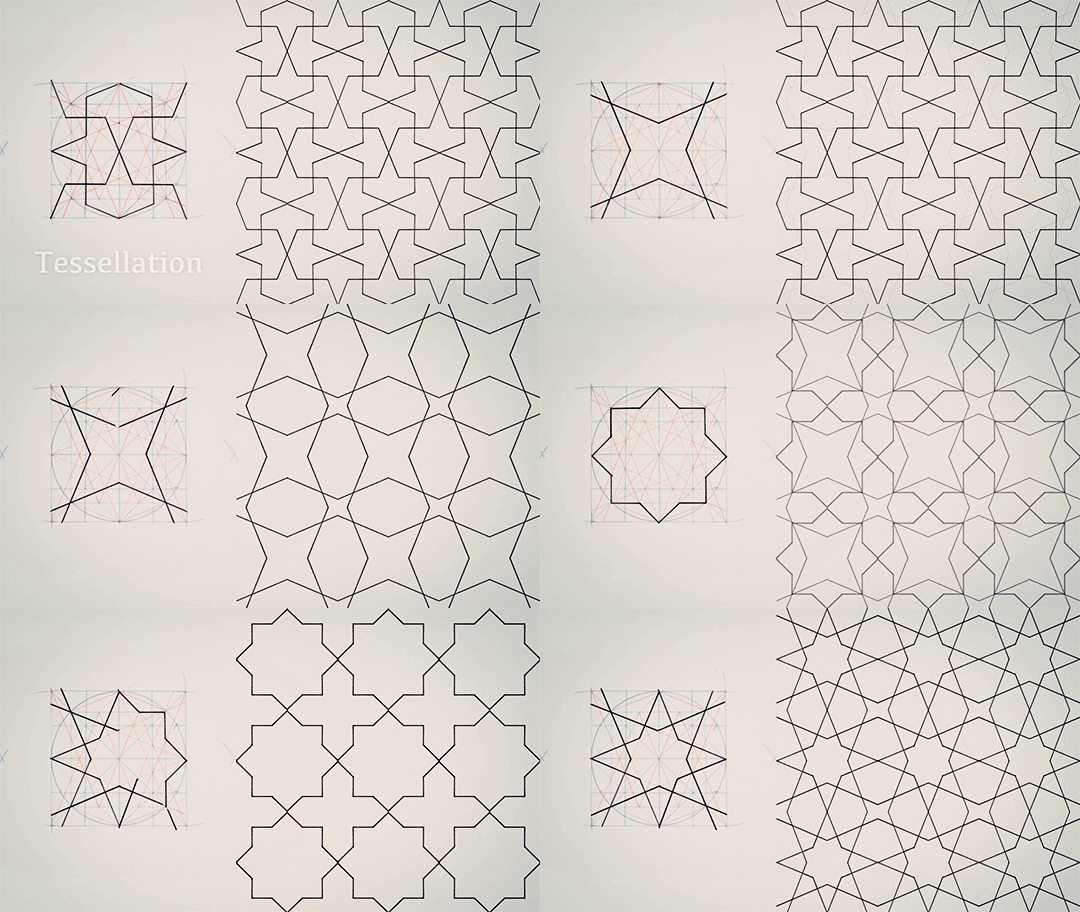
Many different designs are possible from the same construction lines just by picking different segments. And the full pattern finally emerges when we create a grid with many repetitions of this one tile in a process called tessellation.
By choosing a different set of construction lines, we might have created this any of the above patterns. The possibilities are virtually endless.
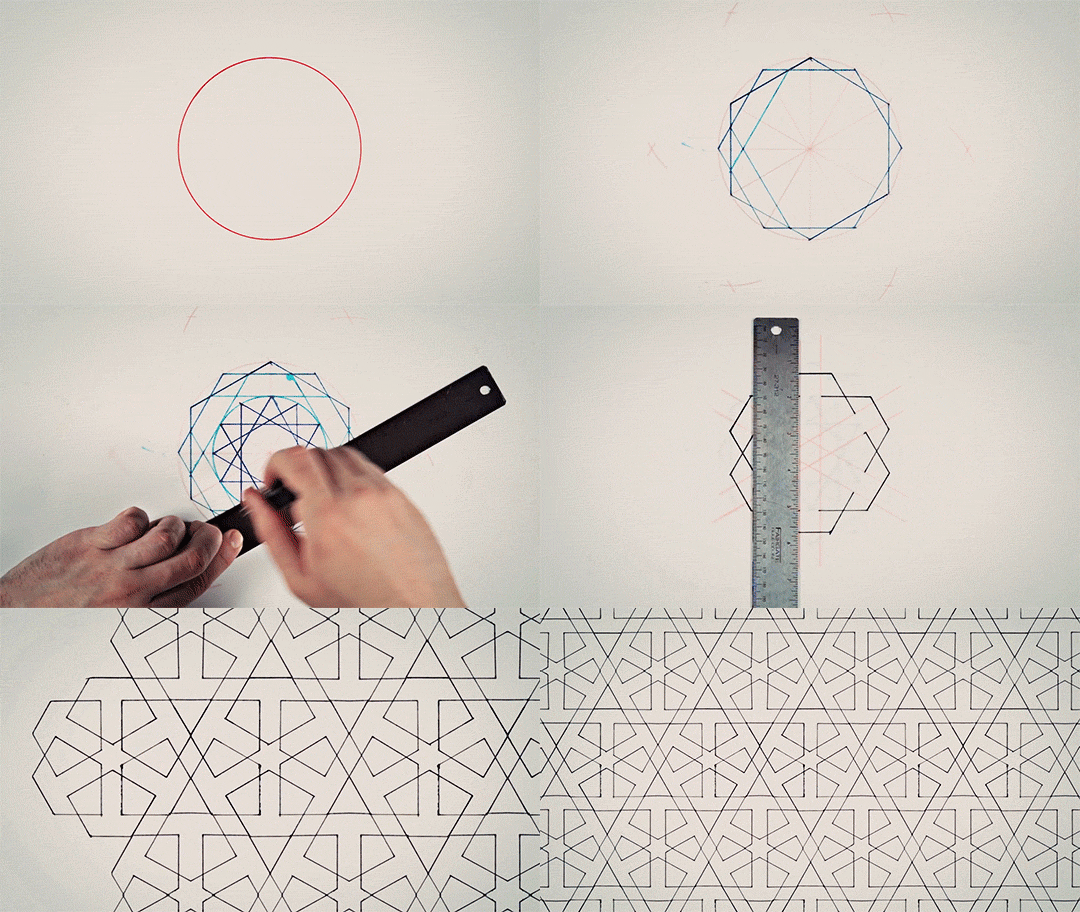
We can follow the same steps to create sixfold patterns by drawing construction lines over a circle divided into six parts, and then tessellating it, we can make something like the above.
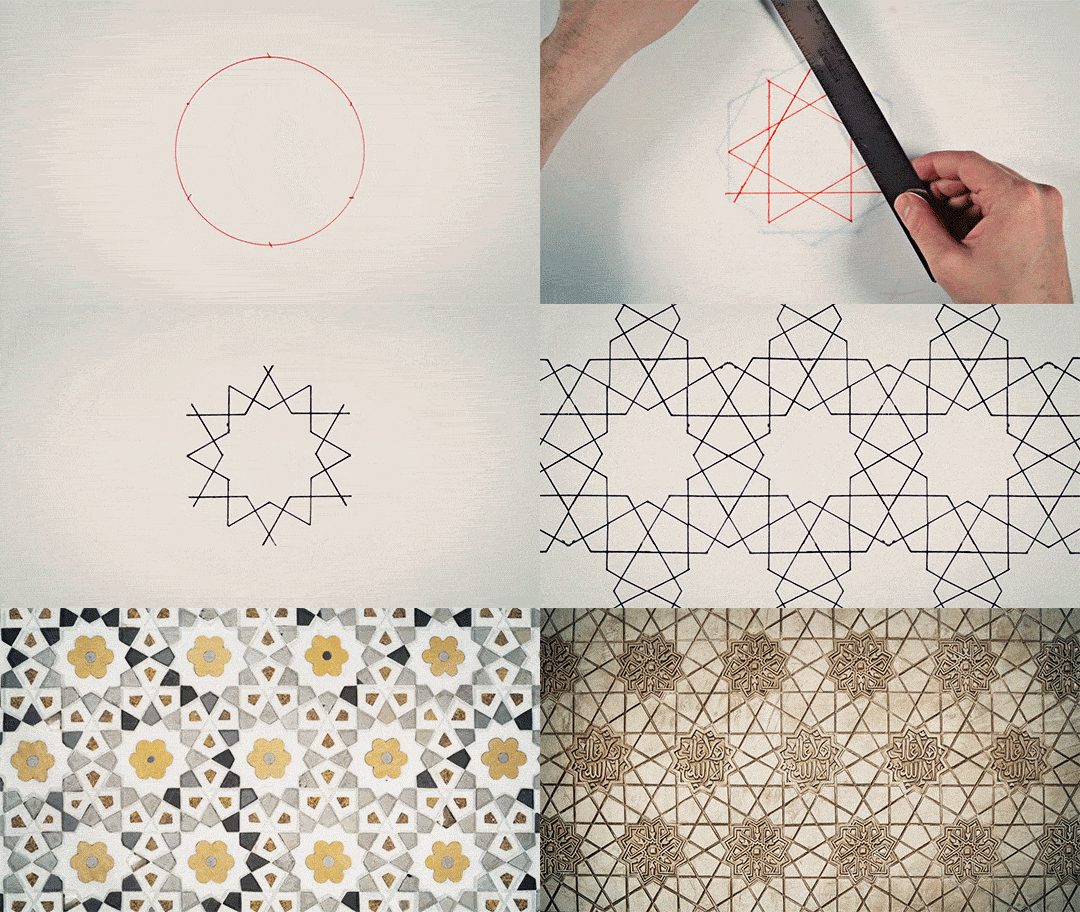
Here’s another sixfold pattern that has appeared across the centuries and all over the Islamic world, including Marrakesh, Agra, Konya and the Alhambra.
Fourfold patterns fit in a square grid, and sixfold patterns in a hexagonal grid.
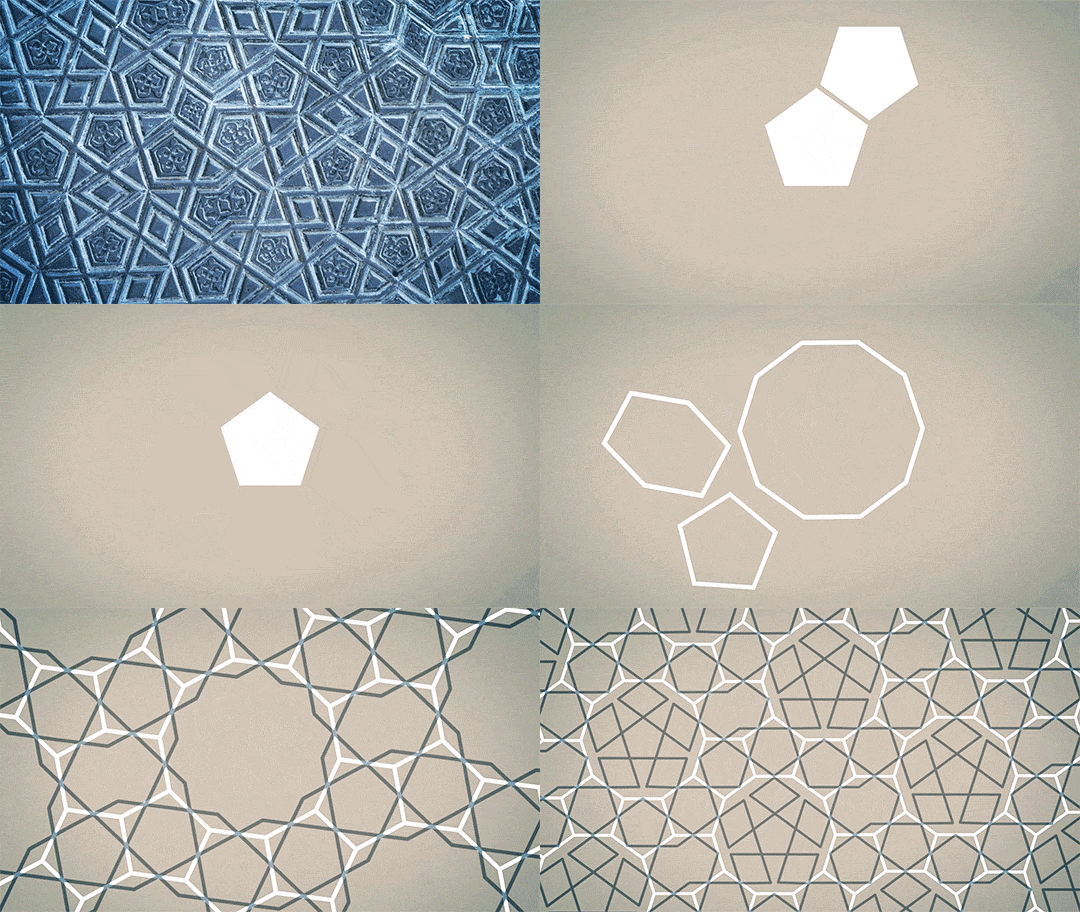
Fivefold patterns, however, are more challenging to tessellate because pentagons don’t neatly fill a surface, so instead of just creating a pattern in a pentagon, other shapes have to be added to make something that is repeatable, resulting in patterns that may seem confoundingly complex, but are still relatively simple to create.
This more than 1,000-year-old tradition has wielded basic geometry to produce works that are intricate, decorative and pleasing to the eye. And these craftsman prove just how much is possible with some artistic intuition, creativity, dedication along with a great compass and ruler.
If grandmothers around the world had a rallying cry, it would probably sound something like “You need to eat!”
Photographer Gabriele Galimberti’s grandmother said something similar to him before one of his many globetrotting work trips. To ensure he had at least one good meal, she prepared for him a dish of ravioli before he departed on one of his adventures.
“In that occasion I said to my grandma ‘You know, Grandma, there are many other grandmas around the world and most of them are really good cooks,” Galimberti wrote via email. “I’m going to meet them and ask them to cook for me so I can show you that you don’t have to be worried for me and the food that I will eat!’ This is the way my project was born!”
The project, “Delicatessen With Love”, took Galimberti to 58 countries where he photographed grandmothers with both the ingredients and finished signature dishes.
Galimberti said many of the subjects for the project were selected serendipitously, picked while he was working on a project about couch surfing that explored the global phenomenon of staying in other people’s houses. Since Galimberti never slept in hotels while working on the project, he was able to come into contact with people who introduced him to grandmothers in the area.
Galimberti acted as photographer and stylist during each shoot with the grandmothers, taking a portrait of both the women and the food they made for him.
From top to bottom:
Inara Runtule, 68, Kekava, Latvia. Silke €(herring with potatoes and cottage cheese).
Grace Estibero, 82, Mumbai, India. Chicken vindaloo.
Susann Soresen, 81, Homer, Alaska. Moose steak.
Serette Charles, 63, Saint-Jean du Sud, Haiti. Lambi in creole sauce.
The photographer’s grandmother Marisa Batini, 80, Castiglion Fiorentino, Italy. Swiss chard and ricotta Ravioli with meat sauce.
Normita Sambu Arap, 65, Oltepessi (Masaai Mara), Kenya. Mboga and orgali (white corn polenta with vegetables and goat).
Julia Enaigua, 71, La Paz, Bolivia. Queso Humacha (vegetables and fresh cheese soup).
Bisrat Melake, 60, Addis Ababa, Ethiopia. Enjera with curry and vegetables.
very very cool.
My special Grandmother food was from my Mum’s mum, and it was fresh soda bread with lots of butter and home-made raspberry jam.
Griddle soda is made so fast that when I say “fresh” I mean the bread on my plate was just ingredients in jars when we came through the door. Three-quarters of an hour, tops, from “please” to “thank-you”.
@dduane still uses Granny’s recipe, taught to her by my Mum. Mostly we buy the jam nowadays, not make it, but the bread still goes from store-cupboard to plate in ~45 minutes. It still tastes just the way I remember. And probably the way Mum would remember too.
Granny would be proud.
Grandma was… mostly mince and mash and peas and steak pie from the bakers with occasional side trips into trifle. y’know. Serious english comfort food.
Granny, otoh, was ALL about delis (cue my lifelong thing for kabanos) and her parents ran a tea shop, so even before I spent three years in Cornwall, I had OPINIONS about fudge. Like, giant vats you could easily drop a toddler in of boiling sugar and butter on the stove and then the big marble board would get brought out and the iron sticks would get brought out for shaping.
Ok, I’m trying that soda bread.
Food I associate with Grandma: Sausages and baked potatoes on Bonfire Night. Semolina. Rock Cakes. Murray mints. Walking down to the Triangle in Palmers Green for French Fancies.
Food I associate with Grandma Molly, in this order, every single visit: cheesy biscuit. Tomato juice. Roast chicken. Blue Nun for the grown ups (orange juice for us and Uncle Michael). Fruit salad and/or Vienetta.







 326 Miles